TL;DR. B2B software companies between 20 and 500 people face the same question: How does an AI feature become a real revenue mechanism? The answer does not lie in more tools, but in two closely linked systems. An AI-native product machine and an AI-native GTM machine. This article shows software founders how to ignore the hype and instead build a pipeline based on real data and automated workflows.
AI hype is like a digital gold fever
Every second slide in board meetings today shows a Copilot. Nevertheless, most B2B software firms are stuck somewhere between a Proof of Concept and a real roll-out. The pain is specific: teams buy isolated tools instead of rebuilding their core workflows. Software founders observe rising development costs while ARR stagnates. The result is a confusing feature zoo without measurable impact on retention or sales efficiency.
In our work with teams in Zurich, Berlin, and Vienna, we always see the same pattern. The firms that really grow with AI do not have the largest language model. They have the tightest loop between customer data, product development, and sales motion. Those who only stick AI labels on old processes burn capital. Meanwhile, competitors build systems that improve themselves through every interaction.
The point: Two machines, one shared loop
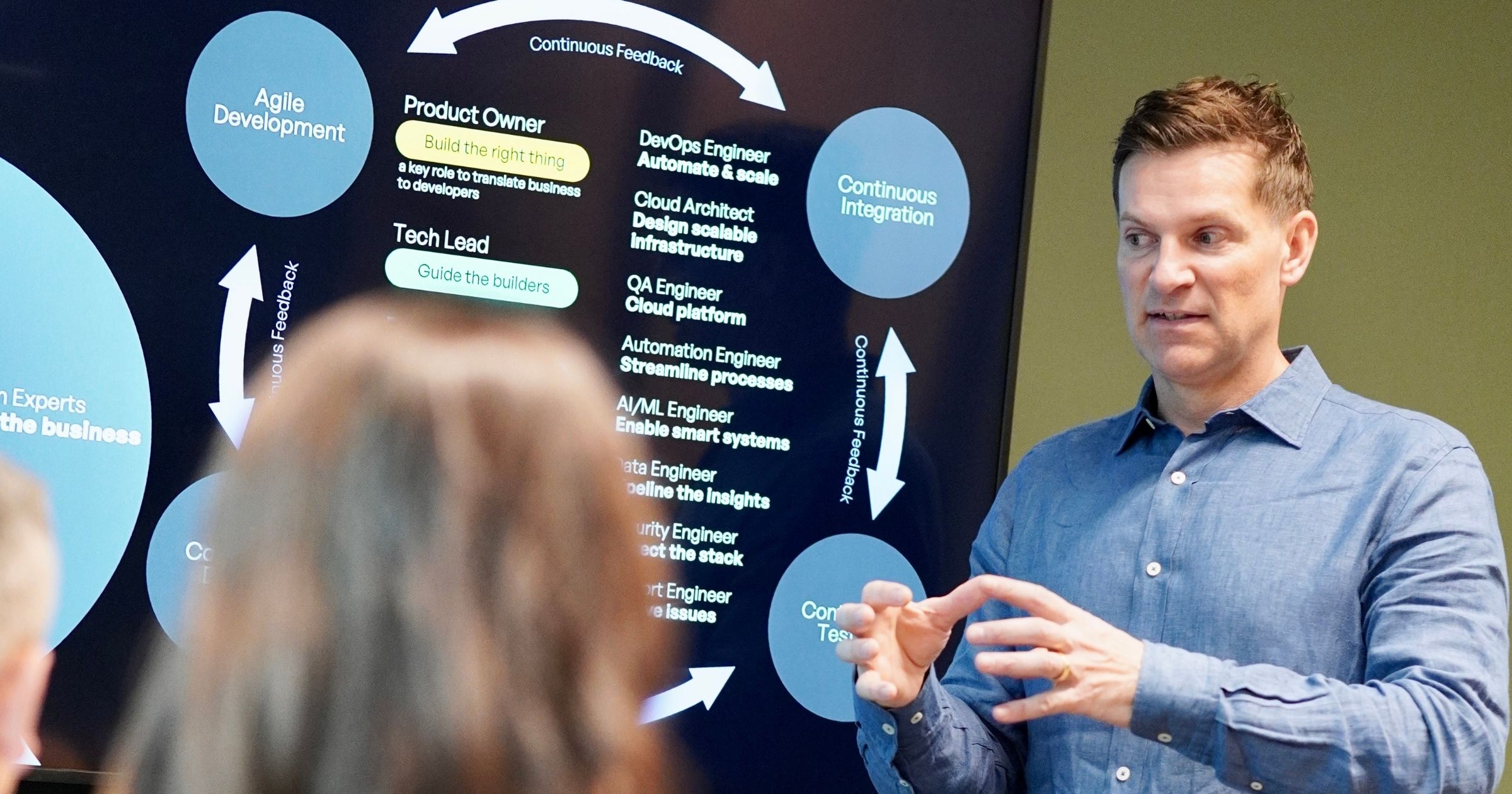
A modern software company grows today through the synchronisation of two systems. The thesis: those who win at being AI-native build a product machine and a GTM machine that share the same data layer. Without this connection, AI remains an expensive experiment without market impact.
- AI in engineering doubles output without new hires.
- AI in sales transforms signals immediately into qualified pipeline.
- Data guardrails protect the company legally and technically.
The PoC cemetery as a structural process problem
Why do 80 per cent of all AI projects in software teams fail? It is rarely due to the technology. It is because no clear owner manages the transition from prototype to productive workflow. Often, data science builds something that engineering cannot integrate, while product management loses sight of customer needs.
A feature needs a fixed place on the roadmap when three conditions are met. First: a specific customer job becomes demonstrably faster. Second: data protection guardrails are active. Third: the sales team can show the added value in a short demo. An AI use case that really drives revenue follows clear logic instead of vague promises.
How to build the AI-native product machine
The product machine automates the creation of software. The goal is a drastic reduction in time-to-value through agentic processes. The setup consists of four steps:
- Integrate coding agents: Developers use agents for reviews and tests directly in the workflow.
- AI Product Management: PRDs are created through automated analysis of support tickets and sales calls.
- Enforce guardrails: PII filters and audit logs are not an option, but a standard before every release.
- Use real-time data: Through RAG systems, the AI accesses current CRM data instead of outdated knowledge. ol>
Modern AI Product Management uses these tools to steer the roadmap based on data.
The GTM machine for scalable pipeline
The GTM machine ensures that innovation reaches the customer. It connects marketing signals directly with sales activity. Those who separate these cycles produce scatter loss. Those who pull them together get a qualified pipeline instead of worthless MQL figures.
The strongest argument for this approach is speed. One software client was able to reduce development cycles from eleven to four weeks through direct feedback from sales into the product. The sales team delivers structured signals from lost deals directly to product ops. This loop eliminates flying blind in prioritisation. The result is a product that almost sells itself because it hits the market pain points exactly.
Why feedback loops are more important than roadmaps
What works: AI features that can be demonstrated live in under two minutes. What does not work: a Copilot as a mere marketing shell over a weak core product. The warning for every software founder is: an AI feature without a security layer is a technical risk that can cost you your trust in the market.
Those who only buy tools wait for success. Those who build the machines control their growth. Everything revolves around the constant exchange between systems. You can find more details on building these structures in our central guide on B2B Software & AI.